Skip to content
Global buyers are no longer choosing custom pouch bags by appearance alone. They examine barrier performance, seal strength, printing quality, and delivery reliability. A glossy pouch may look impressive under showroom lights. It can still fail beside a humid warehouse door.
Alison Keane, president and CEO of the Flexible Packaging Association, has stated, “Flexible packaging protects products while using fewer resources.” Her view offers a useful starting point, but it needs careful application. Lower material use does not automatically mean lower environmental impact. Product protection, recyclability, transport distance, and disposal systems must be assessed together.
This guide explores the top custom pouch bags for international buyers, including stand-up pouches, flat pouches, spouted formats, vacuum bags, and child-resistant designs for lawful consumer products. Each format serves a different purpose. Coffee needs aroma protection. Snacks need strong seals and convenient opening. Liquid products need reliable spouts and leak testing.
Specifications matter. Buyers should request migration documents, material declarations, factory audits, and production samples. They should also confirm whether artwork matches the final pouch structure. A beautiful digital proof can hide weak contrast after lamination.
Some recommendations remain imperfect. Supplier claims may sound precise, while testing conditions differ between factories. Global purchasing requires questions, not assumptions. The strongest choice balances product safety, shelf appeal, cost, logistics, and regional packaging requirements. This comparison will help buyers judge performance in real commercial conditions, not merely in product photographs.
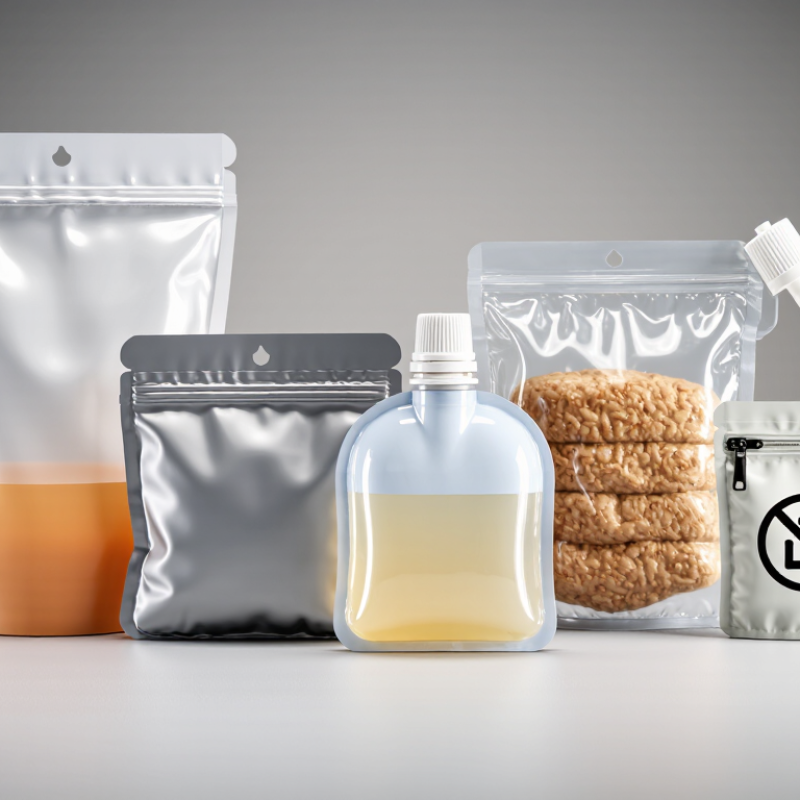
Global buyers often choose custom pouch bags by product needs, filling methods, and shipping conditions. Stand-up pouches remain popular because they use shelf space efficiently and display graphics clearly. Their bottom gusset improves stability on retail shelves. Buyers commonly request resealable zippers for dry foods, pet treats, coffee, and household products.
Flat pouches suit samples, single-use portions, and lightweight promotional packs. They reduce material use and shipping volume, but they offer less shelf presence. Side-gusset pouches provide extra capacity for coffee, powders, and bulk snacks. Spouted pouches work well for sauces, drinks, and other controlled-pour products. The spout position, cap size, and seal strength need careful testing. Small details matter.
For products needing heat processing, retort pouches can provide strong barrier performance when the structure is properly selected. Moisture-sensitive goods may require high oxygen and water-vapor resistance. Buyers should also review recyclable or mono-material options, although these solutions may involve trade-offs in barrier protection and sealing performance. No pouch fits every market. A design approved for one region may need different labeling, testing, or material documentation elsewhere. In practical sourcing work, samples should face drop tests, leak tests, seal checks, and transport simulations. I have seen attractive artwork fail because the zipper felt weak or the pouch stood unevenly. Appearance helps, but function earns repeat orders.
Custom pouch bags rely on material choices that protect products during filling, shipping, and storage. The right structure depends on moisture, oxygen, light, heat, and handling risks.
Polyethylene is flexible, sealable, and suitable for many everyday pouches. Polypropylene offers stronger heat resistance and a clean surface for printing. Polyester adds stiffness and durability, especially when the pouch faces rough transport. These films are often laminated together for better performance. One layer rarely does everything well.
For sensitive products, aluminum foil can provide excellent light, oxygen, and moisture protection. It works well in high-barrier structures, but it may increase cost and reduce recyclability. Kraft paper creates a natural appearance and a pleasant tactile feel. However, paper usually needs plastic or coating layers for reliable sealing and barrier protection. That trade-off deserves careful review.
Compostable cellulose films can support specific sustainability goals. Their performance may change with humidity and storage conditions. Claims should be checked against local certification requirements. Do not rely on appearance alone. Buyers should request seal-strength tests, oxygen transmission data, moisture vapor results, and migration documentation. A pouch can look excellent on paper and still fail on a filling line. Real packaging trials matter. Small errors in heat settings, zipper alignment, or laminate thickness can create leaks, waste, and customer complaints.
A practical comparison of common pouch formats, material structures, barrier performance, and typical global applications.
| Custom Pouch Type | Typical Material Structure | Main Barrier Performance | Common Product Applications | Key Advantages | Main Limitations | Common Global Buyer Priorities |
|---|---|---|---|---|---|---|
| Stand-Up Pouch | PET / PE or PET / Aluminum Foil / PE for higher barrier needs |
Moisture Oxygen Light* | Dry foods, pet food, coffee, powdered products, detergents, and personal-care refills | Large printable surface, efficient shelf display, stable bottom gusset, and lower packaging volume than many rigid containers | Most multilayer versions are difficult to recycle through standard mechanical recycling systems; foil structures are not suitable when microwave heating is required | Resealable zipper, filling volume, spout option, tear notch, export carton efficiency, and local recycling requirements |
| Flat Pouch / Three-Side-Seal Pouch | PET / PE, OPP / CPP, or paper / PE laminate | Moisture Moderate oxygen | Snacks, sauces, samples, medical disposables, single-use personal-care products, and small portions | Lightweight, compact, economical for single servings, and suitable for high-speed form-fill-seal production | Limited shelf presence and lower usable volume compared with gusseted formats; zipper integration can increase material and tooling requirements | Low unit cost, seal integrity, compact shipping, portion size, and compatibility with automated filling equipment |
| Quad-Seal / Box Pouch | PET / PE, PET / Metallized PET / PE, or PET / Aluminum Foil / PE | High moisture High oxygen* Light* | Coffee beans, pet food, grains, snacks, nutritional powders, and premium dry goods | Four sealed corners create a box-like appearance, strong shelf stability, and good volume utilization | More complex converting and filling processes; material combinations with foil or metallized layers may reduce recyclability | High load strength, aroma retention, gusset dimensions, one-way degassing valve for roasted coffee, and premium graphics |
| Spouted Pouch | PE / PE, PET / PE, or PET / Aluminum Foil / PE with a PE or PP fitment | Moisture Oxygen* Light* | Juices, baby food, sauces, liquid detergents, shampoos, and household refills | Convenient dispensing, lower transport weight than many rigid bottles, and options for resealable caps or large refill openings | Fitment and seal areas require strict quality control; mixed-material structures and separate caps can complicate recycling | Cap safety, leak resistance, fitment size, hot-fill or retort compatibility, ergonomic handling, and child-use requirements |
| Retort Pouch | PET / Aluminum Foil / CPP or PET / EVOH / CPP structures designed for retort processing | High oxygen High moisture Light | Ready meals, sauces, seafood, meat products, and shelf-stable foods processed in the sealed pouch | Supports thermal sterilization, long ambient shelf life, and reduced package weight compared with many metal-can formats | Requires heat-resistant seals and validated processing conditions; not all pouch laminates are compatible with retort temperatures | Retort temperature and time, seal strength, burst resistance, food-contact compliance, and validated shelf-life performance |
| Paper-Laminated Pouch | Paper / PE, paper / metallized film / PE, or paper / bio-based coating | Moderate moisture Variable oxygen | Dry snacks, bakery products, tea, confectionery, powders, and promotional or refill packaging | Paper appearance, printable natural surface, and potential reduction in visible plastic content | Paper laminates are not automatically recyclable; grease, moisture, heat-seal layers, and local collection infrastructure affect end-of-life options | Certified paper sourcing, coating composition, recyclability claims, print quality, and resistance to grease or humidity |
| Mono-PE Pouch | PE / PE with compatible PE zipper, spout, or sealant components where applicable | Moisture Moderate oxygen | Frozen foods, dry foods, detergents, pet-care products, and flexible refill packaging | Designed around one polymer family, which can support recycling compatibility where suitable collection and sorting systems exist | May provide less oxygen, aroma, or light protection than foil-based laminates; performance depends strongly on film grade and thickness | Recycling-design guidelines, downgauging potential, seal performance, zipper compatibility, and target-market collection systems |
| Mono-PP Pouch | PP / PP with compatible PP sealing and closure components | Moisture Moderate oxygen Heat resistance | Snack foods, dry mixes, frozen products, microwaveable applications, and selected hot-fill formats | Good stiffness and heat resistance; a single-polymer design may support recycling compatibility in markets that collect and process flexible PP | Flexible PP collection is not available in every market; oxygen and aroma protection may require specialized coatings or barrier films | Heat-seal window, cooking or microwave requirements, local recycling acceptance, stiffness, and barrier targets |
| High-Barrier Metallized Film Pouch | PET / Metallized PET / PE or OPP / Metallized OPP / CPP | High oxygen High moisture Light | Coffee, nuts, powdered beverages, dehydrated foods, supplements, and aroma-sensitive products | Strong protection against light, oxygen, and water vapor while generally using less material than a conventional foil laminate | Metalized coatings can affect recyclability and may require specialized recycling-compatible designs; barrier performance depends on coating quality and flex cracking | Aroma retention, oxygen transmission rate, water-vapor transmission rate, pinhole resistance, and packaging cost |
| Vacuum Pouch | PA / PE or PA / EVOH / PE for enhanced oxygen barrier | High oxygen Moisture Puncture resistance | Fresh meat, cheese, seafood, processed foods, and products requiring air removal | Strong puncture resistance, close product conformity, and reduced oxygen exposure after evacuation | Usually a multilayer structure; vacuum equipment and product geometry influence seal reliability and package appearance | Oxygen transmission rate, puncture resistance, shrink performance, seal strength, food-contact compliance, and cold-chain conditions |
| Biodegradable or Compostable-Claim Pouch | Paper-based laminate or certified compostable polymer films such as PLA/PBAT blends, depending on application | Variable moisture Variable oxygen | Dry foods, produce, food-service items, and applications with access to suitable industrial composting systems | Can support a lower-fossil-plastic positioning when the material, certification, product use, and disposal route are properly matched | Not automatically home-compostable or recyclable; heat, moisture, shelf-life, and industrial composting requirements must be verified | Recognized certification, disposal instructions, shelf-life validation, sealing performance, and compliance with destination-market claims rules |
*Barrier performance varies with resin grade, film thickness, coating quality, seal design, production conditions, and storage environment. Buyers should confirm oxygen transmission rate, water-vapor transmission rate, light barrier, food-contact status, and end-of-life claims through technical specifications and testing.
Product categories demand different pouch structures, closures, and barrier levels. For coffee, high oxygen and moisture barriers protect aroma and prevent staling. A one-way valve can release gas after roasting. For snacks, lightweight stand-up pouches with strong seals support fast retail handling. Pet food needs tougher films, larger zippers, and puncture resistance. Cosmetic powders often require clean tear lines and controlled dispensing.
According to Grand View Research, the global flexible packaging market reached about USD 261 billion in 2022. This scale increases buyer expectations for reliable customization. Smithers’ Future of Flexible Packaging to 2029 highlights downgauging, recyclable structures, and improved barrier performance as key industry priorities.
However, a thinner pouch is not automatically better. It may reduce material use, but weak seals can create product loss and costly complaints. A perfect pouch is still a myth.
Tips: Match the barrier to the product, not the artwork. Ask suppliers for oxygen transmission, moisture transmission, seal-strength, and drop-test data. For oily foods, test seal contamination. For liquids, test pressure and leakage. Recyclability claims also need regional verification, because collection systems differ widely. I would request samples filled with the real product, then test them through shipping, storage, and repeated opening. That step feels slow. It often prevents expensive redesigns.
Global buyers often compare stand-up, flat-bottom, and spouted custom pouch bags. The right format depends on product weight, filling method, shelf life, and retail display. Supplier evaluation matters more than attractive sample photos. Ask for the complete material structure, including film layers, thickness, and barrier performance. Request physical samples. Inspect zipper alignment, corner seals, print clarity, and pouch dimensions. Small details reveal production discipline. Reliable suppliers provide traceable specifications, realistic lead times, and clear quality procedures. They should also understand destination-market packaging requirements.
Review each supplier with a practical checklist. Confirm factory location, equipment, quality controls, and export experience. Ask for a sample approval process and a written specification sheet. Compare minimum order quantities, tooling charges, payment terms, and production schedules. Request test reports for seal strength, drop resistance, migration, and oxygen or moisture barriers when relevant. Verify documents independently when possible. A certificate alone is not proof. Technical conversations matter. Clear answers usually show deeper knowledge. Still, communication can appear strong before production begins, so staged inspections remain valuable.
Tips: Send one detailed pouch drawing. Include dimensions, filling volume, material preference, artwork, and sealing requirements. Ask for a production sample before mass manufacturing. Test it with your actual product. Check leakage after transport simulation. Do not select the lowest quotation automatically. A cheaper pouch may use weaker seals or thinner film. Even careful buyers can miss hidden costs, especially revised tooling or delayed approvals. Leave room for questions and corrections.
Global buyers often compare stand-up, flat-bottom, and spouted custom pouch bags by end use. A good-looking pouch can still fail during filling or transport. I recommend requesting a production sample, not only a digital proof. Check seal width, zipper force, film thickness, and print alignment by hand. Small defects become expensive at scale. My own ordering mistake was trusting carton estimates before receiving final dimensions. That created a preventable freight adjustment.
Compliance starts before artwork approval. Ask the supplier for material specifications, ink details, and recent test reports. Requirements may cover food-contact safety, recycling claims, labeling, and chemical restrictions. They vary by destination and product category. Keep certificates matched to the exact pouch structure. A generic report may not prove compliance. Confirm who acts as importer of record, and clarify responsibility for customs documents. Legal review is wise when claims mention recyclability, compostability, or extended shelf life. These statements need evidence.
Shipping quotes should include pouch weight, packed carton size, pallet pattern, and delivery terms. Compare air and ocean options using the same assumptions. Protect pouches from moisture, crushing, and heat during storage. Request photos of loaded cartons and verify the packing list before dispatch. Allow time for inspection and corrective production. Do not rush. Details matter. Some buyers still overlook warehouse conditions, especially humidity and temperature changes. That oversight can damage seals before the shipment reaches its destination.