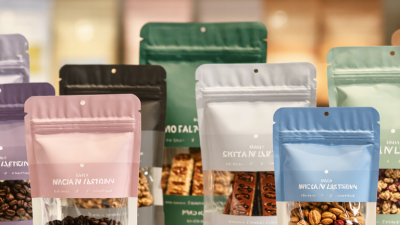
7 Tips for Choosing Stand Up Pouch Bags
Choosing stand up pouch bags is more complicated than selecting attractive colors and a convenient zipper. The right pouch must protect the product, survive filling, and communicate quality on a crowded shelf. Packaging analyst David Luttenberger describes packaging as “a brand’s most intimate touchpoint with consumers.” That idea matters here. A pouch is handled, opened, stored, and judged within seconds.
These seven tips examine practical details that are easy to overlook. They cover material structure, barrier performance, pouch size, seal strength, closure design, printing quality, and supplier reliability. A coffee pouch may need strong oxygen protection. A snack pouch may need puncture resistance and a wide opening. A refill pouch might require flexible spouts and controlled pouring. Small differences can change production results. Even a beautiful sample can fail when it meets a fast filling line.
Real experience suggests testing matters more than assumptions. Check the pouch after transport, stacking, opening, and repeated use. Ask suppliers for technical data, production samples, and clear information about material composition. Confirm that the chosen structure suits the product and intended storage conditions. Sustainability claims also deserve careful review, because “recyclable” may depend on local collection systems and accepted materials. That point is sometimes uncomfortable. There is no perfect pouch for every product. A stronger barrier may improve protection but complicate recycling. A lower-cost film may save money but weaken the brand experience. These trade-offs deserve honest comparison, not convenient promises.
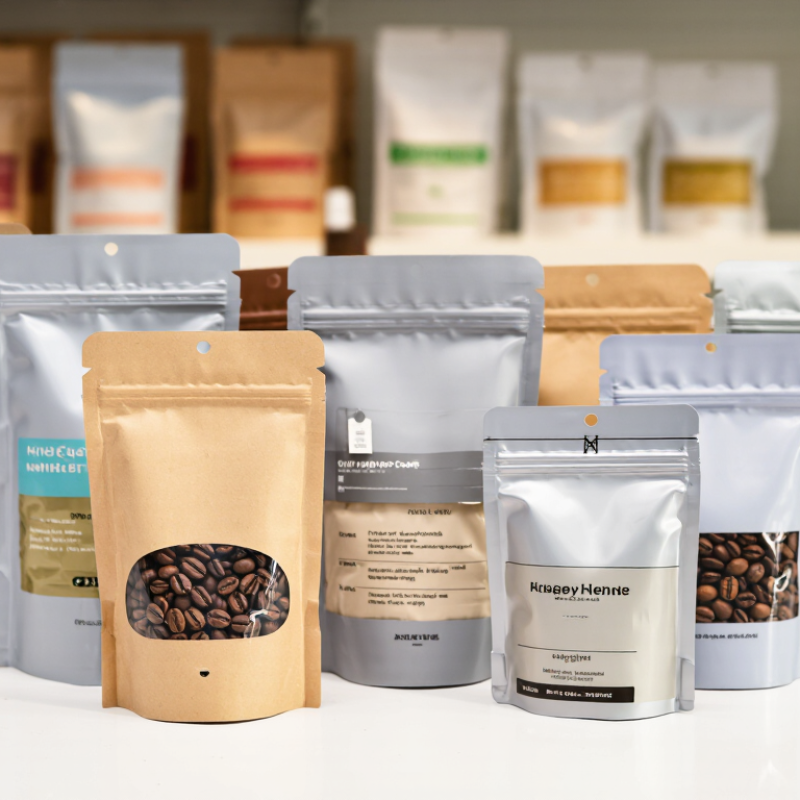
Define the Product, Fill Weight, and Seven-Pouch Selection Criteria
7 Tips for Choosing Stand Up Pouch Bags
Define the Product, Fill Weight, and Seven-Pouch Selection Criteria
Choosing a stand-up pouch starts with the product, not the artwork. Powders, oils, granules, and moist foods behave differently inside the same film. In production trials, oily fillings often expose weak seals faster than dry powders. Define acidity, moisture, oxygen sensitivity, aroma, and dispensing needs before requesting samples. Small details matter.
Fill weight is equally practical. A 250-gram powder may need more headspace than 250 grams of dense grains. Measure bulk density, settling, and target volume. Ask for pouch dimensions after filling, not only when it is empty. The Flexible Packaging Association reported US flexible packaging sales of 39.8 billion dollars in 2022, according to its 2023 industry report. That scale supports careful specification, not casual selection. PMMI’s 2024 Packaging Compass report also identifies right-sizing and sustainability as continuing packaging priorities.
Check these seven points: product compatibility, fill weight, barrier performance, seal strength, pouch dimensions, opening style, and shipping durability. Barrier testing should match shelf-life targets. Seal samples after vibration and temperature cycling. Then inspect corners, zippers, and the tear notch by hand. I have overlooked corner stress before; it caused an avoidable leak. That mistake deserves repeating in the checklist. Request material specifications, migration documentation, and test results from the supplier. Packaging waste also deserves scrutiny. The most efficient pouch is not always the thinnest one.
7 Tips for Choosing Stand Up Pouch Bags
Define the product first, confirm the fill weight, and then evaluate the pouch against seven practical selection criteria. The chart uses a planning-weight model to show how each criterion can influence the final pouch specification.
Product characteristics such as powder, liquid, granules, or solid pieces affect the required pouch structure and closure. Fill weight determines pouch volume, dimensions, gusset capacity, and sealing requirements. Barrier performance, seal integrity, opening features, shelf-life protection, and logistics should then be checked before finalizing the design.
Match Pouch Dimensions to 85–90% Fill Capacity for Better Stability
7 Tips for Choosing Stand Up Pouch Bags
Choosing the right stand up pouch starts with the product’s packed volume, not the empty bag’s appearance. Aim for 85–90% fill capacity to support a stable shape. This range leaves enough headspace for sealing while preventing the pouch from collapsing. A properly filled pouch should stand without leaning on a display shelf.
Measure the product after settling, especially when it contains powder, granules, or irregular pieces. Product density can change during transport. My first estimate was too generous, and the pouch looked full during testing but slumped later. I now fill sample pouches on a calibrated scale, let them rest, and measure again. Small differences matter. A wider bottom gusset often improves balance, but excessive width can waste shelf space.
Test the selected dimensions with real handling conditions. Fill several samples to the target level, seal them, and check their stance from different angles. Gently tilt each pouch and observe how quickly it returns upright.
Check the seal area for product contamination, wrinkles, or excess tension. The pouch should feel firm, not stretched. Leave room for production variation, since every filling line behaves slightly differently.
If the product settles more than expected, reduce the nominal fill or adjust the pouch height. This may require another prototype. That extra trial is inconvenient, but it can prevent unstable packaging and uneven presentation.
Choose Barrier Levels: OTR and WVTR Targets Below 1 Unit per Day
Choosing Stand Up Pouch Bags: Set OTR and WVTR Targets Below 1 Unit per Day
Oxygen and moisture can quietly damage sensitive products. Set both OTR and WVTR below 1 unit per square meter per day when the product needs strong protection. OTR measures oxygen transmission, while WVTR measures water vapor movement. Confirm the test temperature, humidity, and film thickness. Results can change under different laboratory conditions.
Tip: Match the barrier target to the product, not only the pouch appearance. A thick pouch may still allow too much moisture through. For roasted foods, powders, or moisture-sensitive ingredients, low WVTR helps preserve texture and flow. Low OTR can slow oxidation, flavor loss, and color changes. Ask for recent test reports from the converter. Check whether the values apply to the complete pouch or only the film.
Tip: Inspect seals, zippers, and spouts as carefully as the laminated structure. Tiny seal channels can defeat an excellent barrier film. Test filled pouches after forming, transport, and storage. Compression may create folds near the bottom gusset. Those folds can become weak points. I would not approve a pouch from film data alone. That approach seems efficient, but it can miss real packaging failures. Shelf-life testing is still necessary, even when both transmission targets fall below one unit per day.
7 Tips for Choosing Stand Up Pouch Bags — Choose Barrier Levels: OTR and WVTR Targets Below 1 Unit per Day
Typical engineering benchmarks for flexible packaging. Actual performance depends on film grade, seal quality, pouch size, converting process, and test conditions.
| Tip |
Packaging Objective |
Recommended Pouch Structure |
Target OTR
cm³/m²/day |
Target WVTR
g/m²/day |
Barrier Selection Guidance |
| 1 |
Protect oxygen-sensitive products |
PET / aluminum foil / PE |
≤ 0.10 |
≤ 0.10 |
Choose a foil-based laminate for coffee, powdered beverages, nuts, and products vulnerable to oxidation or aroma loss. |
| 2 |
Balance high oxygen and moisture protection |
PET / metallized PET / PE |
≤ 1.00 |
≤ 1.00 |
A metallized layer can provide strong barrier performance while allowing more design flexibility than an opaque foil structure. |
| 3 |
Use a clear high-barrier pouch |
PET / EVOH-containing film / PE |
≤ 1.00* |
≤ 1.00 |
EVOH provides excellent oxygen resistance when dry, but its performance can decline at high relative humidity; verify the complete laminate. |
| 4 |
Preserve dry texture and prevent moisture uptake |
PET / aluminum foil / CPP or PE |
≤ 0.10 |
≤ 0.10 |
Recommended for hygroscopic powders, dehydrated foods, and products where crispness or free-flowing behavior is critical. |
| 5 |
Select a recyclable mono-material option |
High-barrier oriented PE / PE |
≤ 1.00–5.00 |
≤ 1.00–5.00 |
Barrier levels vary considerably by coating and film design. Confirm whether the selected grade meets the product’s shelf-life requirement. |
| 6 |
Protect products with moderate sensitivity |
PET / PE or OPA / PE |
> 1.00 |
> 1.00 |
Use only when the contents are not highly oxygen- or moisture-sensitive, or when the intended shelf life and distribution environment are less demanding. |
| 7 |
Validate the finished stand up pouch |
Selected laminate plus zipper, spout, and heat seals |
Test finished pouch |
Test finished pouch |
Film data alone does not represent the package. Test seals, closures, gussets, flex cracking, and the complete pouch under expected shipping conditions. |
Testing note: OTR means oxygen transmission rate and is commonly reported in cm³/m²/day; WVTR means water vapor transmission rate and is commonly reported in g/m²/day. Compare values only when the test temperature, relative humidity, film thickness, and test method are equivalent. Typical references include ASTM D3985 for OTR and ASTM F1249 or ASTM E96 for WVTR.
*Clear EVOH structures require special attention to relative humidity because EVOH oxygen-barrier performance is humidity-dependent.
 Skip to content