Skip to content
Buying stand up pouch bags in bulk can lower unit costs, but only when the bags suit your product, filling process, and storage needs. A low price means little if seals fail, dimensions waste shelf space, or the pouch cannot run smoothly on your equipment. Check material structure, thickness, zipper style, barrier requirements, print quality, and minimum order quantities. Ask suppliers for technical data, samples, and written specifications. Then test the bags with your actual product and filling line—not just an empty sample.
An illustrative expert voice for this introduction, rather than a sourced quotation, is packaging advisor Jordan Lee: “A good bulk purchase is measured by reliable performance, not the lowest price per pouch.” Small details matter. Confirm whether quoted costs include printing, tooling, freight, and setup fees. Request the production lead time and clarify how defects will be handled. Compare suppliers on documented quality controls, communication, and their ability to repeat the same specifications across orders. Keep samples and approved artwork for reference. That adds up. The ten tips ahead cover these checks, from defining pouch requirements to negotiating quantities and reviewing supplier reliability. Use them as a practical checklist, not a substitute for testing. Even careful buyers can miss something; a short production trial may reveal issues a polished sample hides.
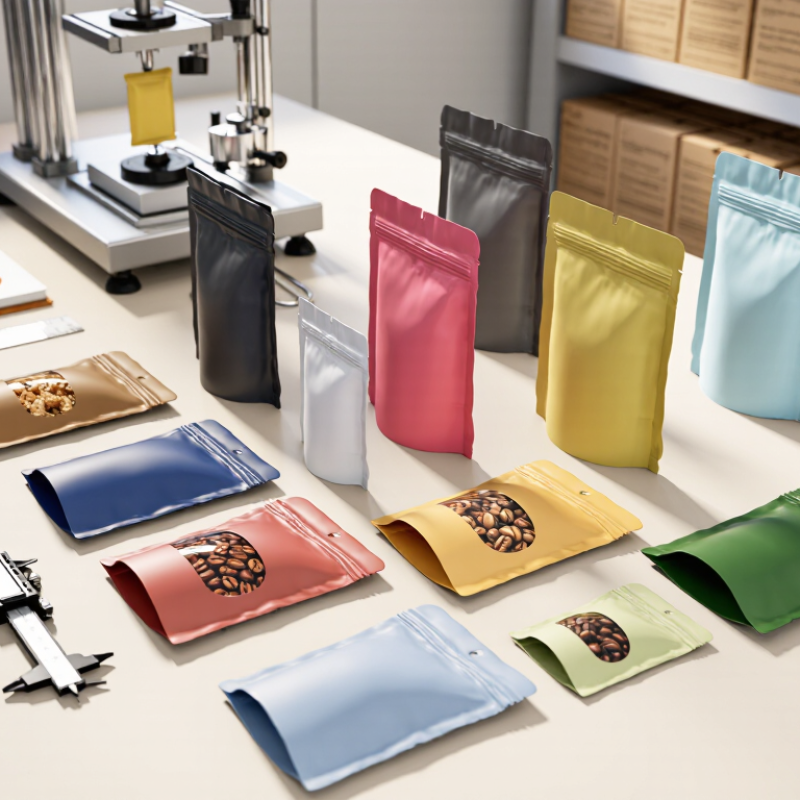
The Flexible Packaging Association’s 2023 State of the U.S. Flexible Packaging Industry report estimated U.S. flexible packaging sales at $42.9 billion in 2022. That scale shows how widely flexible formats are used, but it does not tell you which pouch suits your product. Define the fill weight, product texture, shelf-life target, and shipping conditions first. A powder, a chunky snack, and a liquid place different demands on seals, barriers, and pouch shape. Small details matter.
Tip: Send suppliers the product’s dimensions and a realistic filling sample. Specify finished pouch width and height, bottom gusset depth, zipper or spout needs, and whether the pouch must stand when partly filled. Identify the required barrier against moisture, oxygen, or light, then ask what material structure and test evidence support it. Do not choose a thicker film by habit; it may add cost without solving the actual problem.
Tip: Request samples for your filling line and distribution test before ordering in bulk. Check seal strength, fit, opening, and stability after filling. A pouch that looks right on a screen can slump on a shelf. I have seen specifications get too complicated, too; leave room to question features that have no clear job. Recheck the approved dimensions and artwork before production.
10 Tips for Buying Stand Up Pouch Bags in Bulk
Compare the pouch structure with the product’s real risks. A PET/PE laminate may suit dry snacks, while products sensitive to oxygen or moisture may need foil or a high-barrier layer. Ask suppliers for oxygen and water-vapor transmission results, not just “high barrier” claims. ASTM F1249 measures water-vapor transmission; ASTM D3985 measures oxygen transmission. Small details matter. A clear window can change protection, so test the actual finished pouch.
Size affects more than shelf appearance. Check fill weight, product settling, headspace, and shelf dimensions using samples from a production run. Then compare closures: zippers support repeated use, while tear notches and seals affect opening and leakage. The Flexible Packaging Association’s 2023 State of the U.S. Flexible Packaging Industry report put U.S. industry sales at $42.9 billion in 2022. That scale makes supplier specifications especially important, but a large market is no substitute for product-specific testing. A tidy spec sheet can still miss real handling conditions. Before ordering bulk, request seal-strength data, often measured with ASTM F88, and test filled pouches after shipping simulation. I would not assume the cheapest unit price is the lowest total cost; rejects and poor fit can quietly erase the savings.
| Tip | What to Compare | Practical Checks | Bulk-Buying Guidance |
|---|---|---|---|
| 1 | Match the material to the product | Common structures include PET/PE laminates for general packaging, metallized or foil laminates for stronger light and oxygen protection, and paper-based laminates for an outer paper appearance. A laminate’s layers and sealant must suit the product and filling process. | Request the exact layer structure and confirm food-contact requirements for your sales market. Do not assume that a paper-look pouch is recyclable or that all laminates provide the same barrier. |
| 2 | Set the barrier level from shelf-life needs | Moisture-sensitive products may need a low water-vapor transmission rate; oxygen- or aroma-sensitive products may need a low oxygen transmission rate. Light-sensitive contents may benefit from an opaque or metallized layer. | Ask for test methods and figures for WVTR and OTR, plus the test conditions. Compare like-for-like data, since results depend on the material and testing conditions. |
| 3 | Choose dimensions using filled product volume | Compare pouch width, body height, and bottom-gusset depth. Capacity depends on product density, particle shape, fill level, and headspace; equal dimensions do not guarantee equal usable capacity. | Provide the supplier with the product, target net weight, and filling method. Test actual samples filled with your product before approving a large order. |
| 4 | Check closure type and opening design | Options can include press-to-close zippers, tear notches, slider closures, or heat-sealed tops. A zipper supports repeated opening but does not replace the initial heat seal or make a pouch leakproof. | Test opening force, zipper alignment, and resealing with the intended contents. Confirm whether the package requires a tamper-evident top seal. |
| 5 | Confirm fit with the filling equipment | Check pouch opening width, top clearance, seal area, gusset behavior, and pouch stability. Spouts, valves, or other features can affect filling and sealing requirements. | Run a production-line trial with representative pouches. Confirm tolerances and sealing conditions with the equipment operator before ordering bulk quantities. |
| 6 | Select a suitable pouch size range | Small packs can suit single-use portions, while larger formats may suit multi-use products. The best size depends on the product’s density, serving amount, and required headspace—not weight alone. | Compare a small set of sample sizes using the real product. Check filled dimensions, shelf presence, and carton packing before standardizing on one size. |
| 7 | Specify thickness and durability | Total laminate thickness, seal strength, puncture resistance, and drop performance all affect package durability. Thickness alone does not determine barrier performance or overall quality. | Request a written specification and test criteria. Evaluate filled pouches for handling, transport, and storage conditions similar to those expected in distribution. |
| 8 | Review print and finish requirements | Consider printed or unprinted film, matte or gloss finishes, clear windows, and the number of print colors. A window may reduce the barrier in that area unless a suitable structure is specified. | Confirm artwork dimensions, color expectations, print repeat, and proof-approval steps. Ask whether printing changes the minimum order quantity or lead time. |
| 9 | Compare the full order cost | Evaluate unit price alongside tooling or setup charges, freight, duties where applicable, storage needs, and the cost of obsolete printed stock. Minimum order quantities can vary by size and print setup. | Request a written quotation for the same specification at several quantities. Balance per-unit savings against cash flow, storage capacity, and expected demand. |
| 10 | Approve samples and written specifications | Check dimensions, material structure, closure function, seal quality, appearance, and filled-product performance. Agree on acceptance criteria and any required compliance documents before production. | Keep an approved reference sample and specification. Confirm production lead time, quality checks, packaging for shipment, and the process for handling defects. |
Specifications and performance vary by pouch construction, product, filling process, and test conditions. Verify suitability with production samples and qualified packaging suppliers.
A bulk order can magnify a small supplier problem. Before requesting a quote, ask about production capacity, lead times, and how delays are handled. Request recent examples of comparable pouch orders, not just a general capability sheet. A clear answer about material changes or shipment schedules is useful evidence of reliable communication. Details matter.
Review certifications carefully. Check the issuing organization, covered facility, product scope, and expiration date. A certificate may apply to one site or material, not every pouch the supplier offers. If documentation is unclear, ask the supplier to confirm its scope in writing. This extra step can feel tedious, but it helps prevent assumptions from becoming costly.
Samples deserve practical testing, too. Compare pouch dimensions, film thickness, zipper operation, and seal consistency against your specifications. Fill a sample with a representative product, then check for leaks after handling and storage. Small tests help. A sample is not a guarantee of every production run, though. It is tempting to approve a pouch because it looks neat on a desk; test it under conditions closer to actual packing before committing to a large quantity.
Before comparing bulk prices, lock down the pouch size, material, zipper, finish, and print coverage. A small change in width can alter both material use and carton count. Ask each supplier for the minimum order quantity and price breaks at several volumes. The cheapest unit price may require more bags than your storage space can handle. Small details add up.
Calculate the full order cost, not just the quoted price per pouch. For example, 10,000 pouches at $0.18 each cost $1,800. Add a $250 setup charge and $160 freight, and the total reaches $2,210, or about $0.221 per pouch before taxes and storage. If 2% arrive unusable, the effective cost per usable pouch rises to roughly $0.225. Treat this as a planning example; actual fees and defect rates vary. Ask for setup, sampling, shipping, and payment fees in writing.
Compare quotes with identical specifications and delivery terms. Check whether freight covers delivery to your location, and confirm the number of pouches per carton. I may be overcautious, but storage is easy to underestimate: a lower bulk rate can tie up cash and shelf space for months. A written quote makes those trade-offs easier to see.
Before ordering stand up pouch bags in bulk, turn customization into a written specification. List finished width, height, bottom gusset, film structure, thickness, zipper style, and finish. Then request a physical sample or signed proof showing artwork placement, colors, and seal area. Check whether the quoted price includes setup fees, sample charges, and repeat-order costs. Small details matter. An overlooked valve or matte finish can change both cost and filling performance.
Ask the supplier to separate artwork approval, material sourcing, production, inspection, and transit in its schedule. Confirm when production begins, especially if the clock starts only after deposit and final file approval. Get a realistic ship date, not just a factory completion estimate, and leave room for revisions. Bulk schedules can slip; a tight launch plan needs a buffer. Shipping terms should identify the delivery point and clarify who arranges freight, insurance, and import charges. Also confirm carton counts, pallet dimensions, tracking, and the process for reporting damaged or short shipments. Quotes can look simple while leaving important details unclear.