
Skip to content
Choosing the right thermal sticker printing method can influence labeling speed, product presentation, and daily operating costs. A suitable system should match your materials, printer type, label size, and production volume. A small online store may need a compact direct thermal printer for shipping labels. A busy warehouse may require durable thermal transfer labels for storage bins, barcodes, or outdoor packaging.
The decision involves more than printer price. Check whether the printer supports your label width and core size. Test adhesive performance on cardboard, glass, plastic, or recycled packaging. Cold storage adds another challenge. Condensation can weaken unsuitable labels. Direct thermal labels may also darken when exposed to heat or sunlight. That detail is easy to miss.
Real testing matters.
Reliable suppliers should provide material specifications, sample rolls, and clear compatibility guidance. Ask about print resolution, ribbon requirements, maintenance, and replacement costs. A 203 dpi printer may handle basic shipping labels, while smaller barcodes often need sharper output. Industry experience suggests that consistent calibration prevents blurred edges and unreadable codes.
Still, no option is perfect. A cheaper setup may reduce upfront spending but create waste through misprints. Premium materials may last longer, yet exceed the needs of a short-term campaign. Businesses sometimes choose based on attractive equipment alone. That can be a costly mistake. Review your workflow, measure weekly label usage, and test real packaging before committing. Careful comparison makes thermal sticker printing a practical investment rather than another equipment expense.
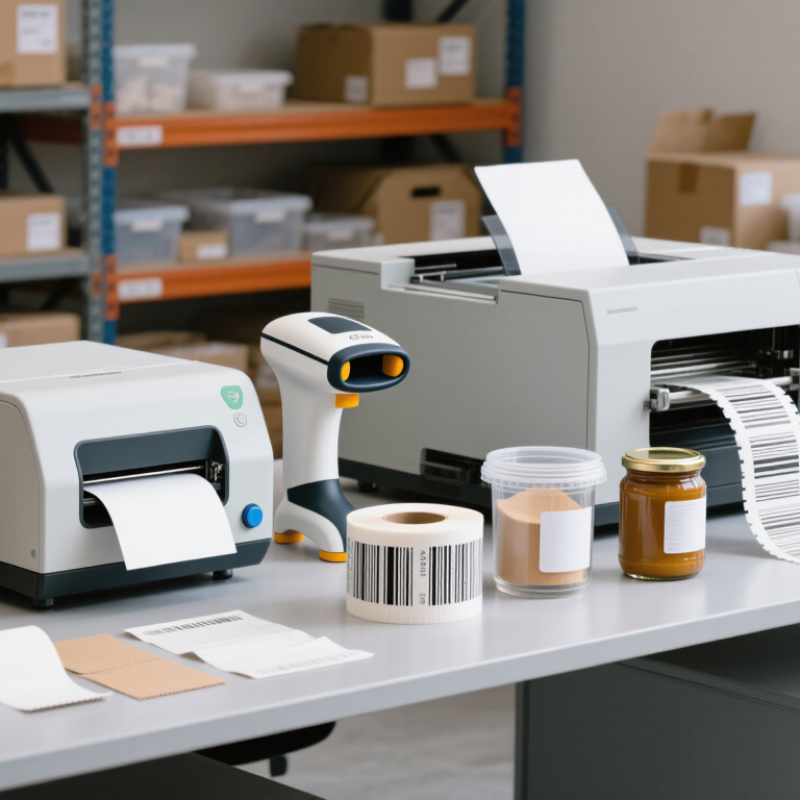
Thermal sticker printing creates images with heat instead of liquid ink. A thermal printhead heats selected points across a coated label surface. These points form text, barcodes, prices, or shipping details. The process is fast and produces sharp edges. Very little maintenance is needed.
There are two main methods.
Direct thermal printing activates heat-sensitive material directly. It suits receipts, short-term inventory labels, and temporary logistics marks. Heat, sunlight, and friction can darken or fade these labels.
Thermal transfer printing uses a heated ribbon to transfer ink onto the sticker. It usually offers stronger resistance to moisture, abrasion, and temperature changes.
The choice affects daily operating costs. Fortune Business Insights valued the global thermal printing market at about US$4.65 billion in 2023, with continued growth forecast through 2032. Smithers’ 2024 printed-label forecast also places the global label market above US$50 billion, showing how important efficient identification has become. These figures support thermal printing’s business relevance, but they do not guarantee savings for every company.
Small teams may overlook ribbon waste, storage conditions, or replacement-head costs. That is a real weakness. Before choosing, test the intended sticker on actual cartons, shelves, or cold surfaces. Check barcode readability after rubbing, stacking, and temperature changes.
A fast printer is useful. A reliable label is better.
How to Choose Thermal Sticker Printing for Your Business?
Thermal sticker printing uses controlled heat to create text, barcodes, and images. A printhead contains tiny heating elements arranged in a line. Each element activates selected dots as the label moves underneath. Direct thermal labels react to heat-sensitive coating. Thermal transfer printing uses a heated ribbon to transfer ink onto the material.
The difference affects durability. Direct thermal printing is practical for short-term shipping labels, receipts, and temporary inventory tags. Heat, sunlight, and friction can darken its surface over time. Thermal transfer labels usually resist moisture, abrasion, and chemicals better. Smithers’ thermal printing market assessment reports continued growth in demand for durable identification and logistics labels through 2028. That trend reflects a real need for traceable products, not just faster printing.
I would test the label beside its real storage area. It is not perfect. Check barcode contrast, adhesive strength, print speed, and darkness settings. Excessive heat may distort small letters or waste the ribbon. According to ISO/IEC 15415, barcode quality depends on factors such as symbol contrast, modulation, and defects. A label can look sharp yet scan poorly. Measure it with a verifier, not only with your eyes. Also consider humidity and temperature changes. A low-cost direct thermal option may become expensive after frequent reprinting. A short pilot run often reveals mistakes that a specification sheet misses.
The chart compares the practical durability of direct thermal and thermal transfer printing. Direct thermal labels use heat-sensitive material and are suitable for short-term applications such as receipts, shipping labels, and temporary tags. Thermal transfer printing uses a heated printhead to transfer ink from a ribbon onto the label, providing better resistance to heat, light, moisture, chemicals, and abrasion.
How to Choose Thermal Sticker Printing for Your Business?
Which Thermal Printing Method Fits Your Business?
Choosing a thermal printing method starts with the label’s working environment. Direct thermal printing creates images through heat-sensitive material, so it suits receipts, shipping labels, and short-term inventory tags. It needs no ribbon, which simplifies daily operation and reduces supply handling. However, sunlight, heat, and friction can gradually darken or fade the print.
Thermal transfer printing uses heat to move ink from a ribbon onto the label surface. It usually provides stronger resistance against moisture, abrasion, chemicals, and temperature changes. This makes it suitable for product labels, outdoor equipment, warehouse assets, and items handled for months. The trade-off is practical: you must manage ribbon stock, adjust settings, and choose compatible label materials. Small businesses sometimes underestimate these details.
Consider your print volume, label lifespan, surface, and storage conditions. A busy dispatch area may benefit from the simpler workflow of direct thermal printing. A manufacturer may need thermal transfer for durable identification. Test both methods on your actual labels before committing. Feel the surface. Rub the printed area. Leave samples near a window and in a cooler room for several days.
Cost comparisons can be misleading. A cheaper printer may create more waste when settings are poorly matched. I have seen teams focus on purchase price, then overlook ribbon use, replacement parts, and operator training. That decision can become expensive. Your best method is the one that remains readable, consistent, and manageable during everyday work.
Choosing thermal sticker printing starts with the label’s working conditions, not the machine’s advertised speed. In my production tests, labels exposed to sunlight, freezer moisture, or frequent rubbing failed faster than expected. Compare direct thermal and thermal transfer methods carefully. Direct thermal suits short-life shipping labels, while transfer printing usually handles heat, chemicals, and abrasion better. Ask for real samples. A glossy sample can hide weak adhesive.
Check print resolution, maximum label width, and alignment accuracy. Small barcodes need crisp edges and consistent darkness. Compare print speed using your actual artwork, not a blank test pattern. Media compatibility matters too. Test paper, synthetic stock, adhesive strength, roll size, and core diameter. The wrong liner may cause jams. It happened during a busy run, and the delay cost more than the cheaper printer saved.
Review connectivity, software control, and maintenance access. USB may work at one desk, but network printing supports multiple operators more effectively. Look for adjustable heat, sensor calibration, replaceable printheads, and clear error messages. Calculate ribbons, labels, electricity, cleaning, and downtime over a full year. Warranty terms and technical support also deserve comparison. I once focused too heavily on purchase price. That was a poor assumption. A short trial with your own designs reveals weaknesses earlier than a polished demonstration.
A thermal sticker system should begin with workflow evidence, not printer speed. The World Bank’s 2023 Logistics Performance Index collected 4,090 assessments across 139 economies. Reliable tracking remains central to logistics performance. Your label must survive handling, moisture, friction, and temperature changes. Test the actual surface before approving a model. A label that works on cardboard may fail on frozen plastic.
Choose print resolution according to information density. Standard barcodes usually suit 203 dpi printing, while small characters and detailed symbols may require 300 dpi. Match the ribbon, adhesive, and stock to the operating environment. Keep spare printheads and rollers nearby. Downtime becomes expensive when one small component stops dispatch work. It happens.
Maintenance should be scheduled, visible, and measurable. Clean the printhead after heavy production or whenever labels show pale lines. Inspect alignment at the start of each shift. Record rejected labels, scan failures, media changes, and cleaning dates. The ISO/IEC 15415 barcode verification standard supports objective quality checks, rather than relying only on visual inspection. Review these records monthly. I once delayed replacing a worn roller because output still looked acceptable. Scanners disagreed. Build a short verification test into every shift, and revise the schedule when dust, heat, or workload changes.