How to Choose Thick Paper Tubes for Global Sourcing 2026?
Global sourcing for Thick Paper Tubes in 2026 requires more than comparing prices and wall thickness. Buyers must connect product performance with real packaging conditions, shipping distances, storage humidity, and end-use demands. A tube that feels rigid in a dry warehouse may soften after weeks inside a humid container. That difference can damage labels, rolls, posters, textiles, or industrial materials.
This guide explains how to evaluate tube diameter, paper grade, spiral construction, wall thickness, compression strength, and surface finishing. It also examines supplier experience, production consistency, sampling methods, and quality records. Reliable suppliers should provide clear specifications, test data, traceable materials, and realistic production timelines. Independent verification can strengthen confidence, especially when orders cross several borders. Certifications matter, but they should support evidence rather than replace it.
Small details often decide the result. Check whether the tube remains round after stacking. Measure inner diameter at several points. Ask how moisture protection is handled during export packing. A practical sample test may reveal more than a polished catalogue.
No specification is perfect. Even experienced buyers can overlook seasonal humidity or pallet pressure. That is worth admitting. A careful sourcing decision leaves room for testing, supplier correction, and honest reassessment. With a structured approach, buyers can select Thick Paper Tubes that balance strength, sustainability, cost, and dependable global delivery.
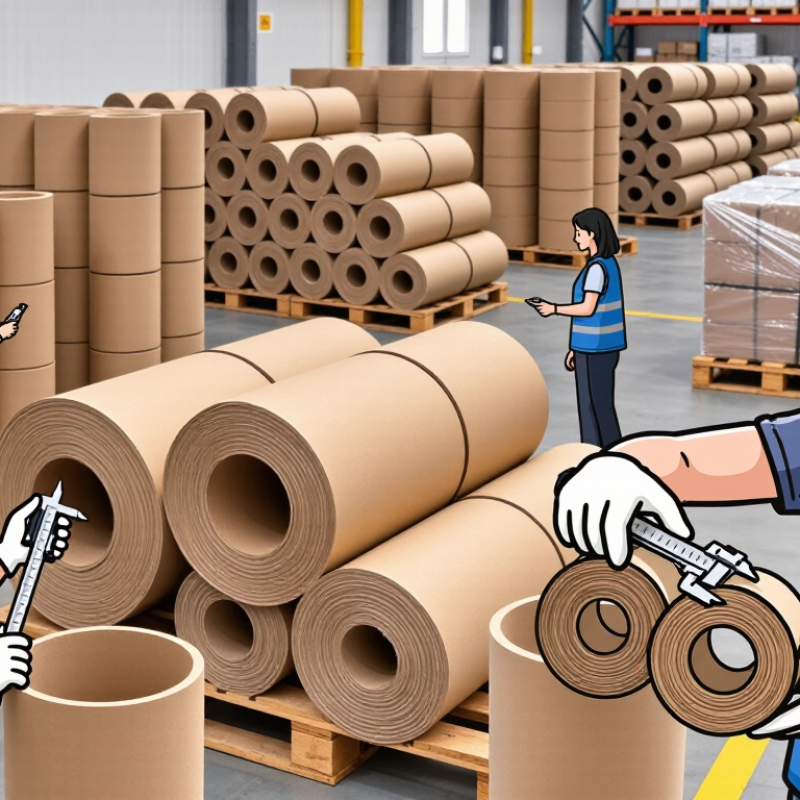
Understanding Thick Paper Tube Types and Global Use Cases
How to Choose Thick Paper Tubes for Global Sourcing 2026?
Thick paper tubes are not one universal product. Their structure changes with winding method, wall thickness, liner, and end finish. Spiral-wound tubes suit many packaging and industrial applications. They balance strength, cost, and production speed. Parallel-wound tubes offer smoother interiors and better dimensional control. Heavy-wall cores handle higher compression, while lighter tubes reduce shipping weight. In practice, “thick” must be measured by wall thickness and load requirements, not appearance alone. This distinction prevents expensive sourcing errors.
For textile and film operations, rigid cores need consistent roundness and clean edges. A slight oval shape can create winding tension problems. Food-contact packaging requires verified material specifications, odor control, and suitable barrier layers. Protective mailing tubes may need moisture-resistant coatings during humid transport. Construction applications demand stronger walls, reliable plugs, and tested crush resistance. Agricultural users may prioritize recyclable fibers and easy disposal. Each use case changes the correct tube design.
Global sourcing adds practical checks. Request samples from different production batches. Test compression, moisture exposure, and plug fit. Ask for fiber composition, adhesive information, tolerances, and packaging details. Certificates help, but they do not replace physical inspection. A common field failure occurs when an inner liner softens during long storage. That risk is easy to underestimate. Review pallet dimensions, container utilization, and local recycling conditions before approving specifications. A tube that performs well in one climate may need a different wall structure elsewhere.
Comparing Manufacturing Standards and Quality Testing Methods
How to Choose Thick Paper Tubes for Global Sourcing 2026?
Manufacturing standards should be agreed before comparing suppliers. Specify inner diameter, wall thickness, length, moisture range, and permitted ovality. A reliable specification sheet prevents vague claims such as “extra strong.” Quality systems aligned with ISO 9001 can support traceability, corrective actions, and consistent production. However, certification alone does not prove that every shipment performs well. Ask for batch records, material grades, adhesive details, and calibration dates for testing equipment.
Testing should reflect the tube’s real application. Radial compression testing measures resistance when pressure is applied around the wall. Axial load testing checks whether stacked tubes buckle under vertical force. Moisture conditioning is essential because paper strength changes sharply in humid storage. Samples should be tested after controlled exposure, not only when they are dry and new. Dimensional checks can use calipers and go-no-go gauges, while visual inspection should record wrinkles, split edges, loose layers, and uneven winding. Small defects matter.
Use a written sampling plan for every production lot. Random samples are more useful than hand-picked pieces. An independent laboratory can verify disputed results, especially for large orders. In practice, suppliers sometimes pass compression tests but fail after long-distance humidity exposure. That gap deserves attention. I would also request retained samples for later comparison. This step is simple, yet often forgotten. No test predicts every warehouse condition, so field feedback should update the specification instead of being treated as an inconvenience.
Evaluating International Suppliers, Costs, and Production Capacity
How to Choose Thick Paper Tubes for Global Sourcing 2026?
When evaluating international suppliers, start with measurable tube specifications. Confirm inner diameter, wall thickness, length tolerance, winding strength, and moisture resistance. A supplier should provide recent test records, sample measurements, and production photos. I also request samples from different batches. One perfect sample proves very little.
Production capacity needs practical verification. Ask about monthly output, machine quantity, shift schedules, and peak-season utilization. A factory producing 500,000 tubes monthly may struggle with a sudden 200,000-unit order. Check whether paperboard, adhesives, and packaging materials come from stable sources. Capacity is not only a number.
Cost comparisons often hide important details. Calculate material price, tooling, packaging, inland transport, ocean freight, insurance, duties, and inspection fees. A lower factory quote can become expensive after delays or high damage rates. Request pricing at several volumes, such as 10,000, 50,000, and 100,000 units. Payment terms also affect cash flow. I prefer a written quality agreement with clear replacement conditions. It sounds cautious, but unclear terms create expensive arguments.
Supplier audits should include moisture control, storage conditions, worker training, and final inspection procedures. Video calls help, though they cannot replace an independent visit. My own sourcing reviews are never flawless. Measurements can be missed, and forecasts can be wrong. Keep a second qualified supplier under review, especially when capacity changes quickly.
How to Choose Thick Paper Tubes for Global Sourcing 2026?
Indicative international supplier cost benchmarks for standard thick paper tubes
Benchmark assumptions: kraft paper tubes with an approximate 75 mm internal diameter, 3 mm wall thickness, 500 mm length, standard brown finish, and an order quantity of 10,000 units. Prices are indicative EXW manufacturing benchmarks in USD per 1,000 tubes and exclude tooling, taxes, inland transport, and ocean freight.
How to use the chart: Lower unit cost should be evaluated together with lead time, quality consistency, export capability, minimum order quantity, and available production capacity. Regional pricing can change significantly with paper grade, tube dimensions, customization, energy costs, and freight conditions.
Managing Compliance, Packaging, Shipping, and Import Risks
How to Choose Thick Paper Tubes for Global Sourcing 2026?
Managing Compliance, Packaging, Shipping, and Import Risks
Thick paper tubes need more than an attractive wall thickness. Ask for compression, moisture, and dimensional test results from the supplier. A 5 mm wall may perform differently under humid warehouse conditions. Check the tube’s inner diameter, length tolerance, end protection, and adhesive composition. These details affect filling, stacking, and customer safety. Request recent production samples, not only catalog photographs. Measure them yourself.
Compliance documents should match the destination market and the intended use. Confirm material composition, recycled content claims, origin records, and packaging-waste obligations. Some destinations require declarations for coatings, inks, or food-contact applications. Never assume a general certificate covers every shipment. Ask who prepares the technical file and how long records remain available. Customs classification also deserves careful review. A wrong code can delay clearance or change the duty calculation.
Packaging decisions can quietly increase landed cost. Tubes packed loosely may crush during container movement. Overpacking wastes cubic space and raises freight charges. Use separators, corner protection, and moisture barriers when climate exposure is likely. Calculate pallet height against warehouse limits. Shipping terms must clearly assign insurance, documentation, and import responsibilities. I have seen careful buyers overlook dimensional weight. That mistake is expensive. Rules also change, and supplier assurances can become outdated. Recheck requirements before each major order, especially when destinations or tube specifications change.
 Skip to content