China Best 2 Ton FIBC Bags Manufacturer
China Best 2 Ton FIBC Bags Manufacturer introduces a practical view of heavy-duty bulk packaging. These bags support demanding applications, including minerals, fertilizers, grains, chemicals, and construction powders. Their performance depends on fabric strength, seam quality, lifting loops, discharge design, and verified safe working load.
Grand View Research reported that the global flexible intermediate bulk container market reached approximately USD 6.96 billion in 2023. The same report projects continued growth through 2030, supported by industrial logistics and reusable packaging demand. Smithers also identifies sustainability, automation, and stronger supply-chain control as important packaging trends. However, market figures vary between reports. Buyers should check each methodology carefully.
Performance matters more than appearance. A 2 Ton FIBC Bags supplier should provide traceable polypropylene materials, batch records, and documented testing. ISO 21898 guidance helps define requirements for flexible intermediate bulk containers. A suitable safety factor, often 5:1 or 6:1, must match the application and handling cycle. Small details matter. Uneven stitching can become a serious weakness.
Walter Soroka, a recognized packaging educator, has stated, “Packaging is a system, not simply a container.” That principle applies directly to 2 Ton FIBC Bags. The bag must work with pallets, forklifts, filling machines, storage racks, and transport conditions. China’s manufacturing strength offers competitive production and customization, but low price alone proves little. Some supplier claims remain too vague. Buyers should request samples, inspection reports, and real production evidence before choosing a manufacturer. Even experienced teams can overlook moisture, abrasion, or incorrect lifting procedures. A reliable partnership keeps reviewing these risks.
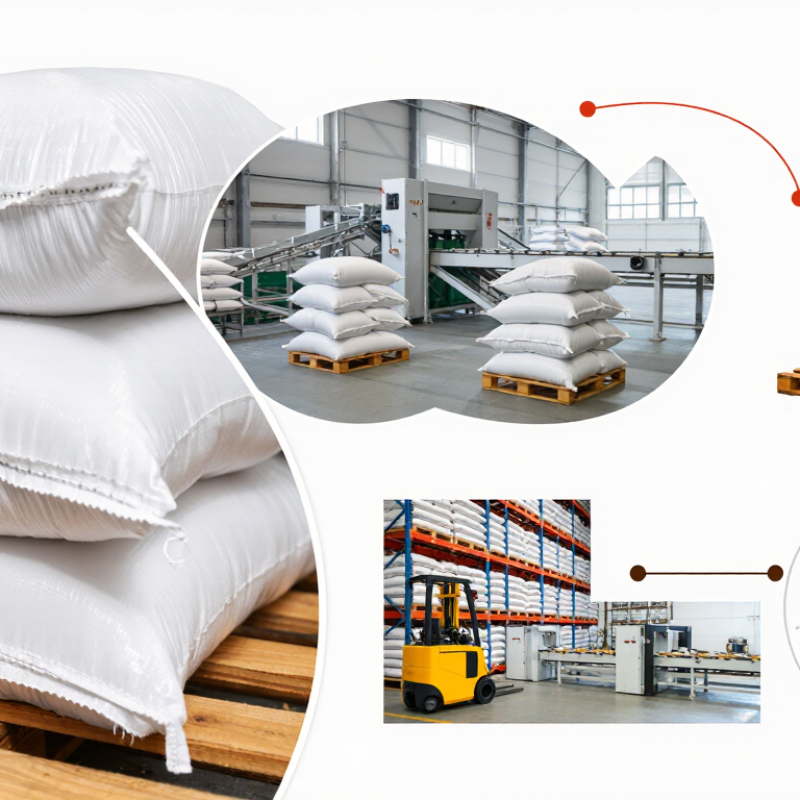
2-Ton FIBC Bags: 2,000 kg Safe Working Load and 5:1 Safety Factor
China Best 2 Ton FIBC Bags Manufacturer
A 2-ton FIBC bag is designed for a 2,000 kg Safe Working Load under defined handling conditions. Its 5:1 safety factor means the fabric and construction target a minimum breaking load of 10,000 kg. This margin supports safer lifting when equipment, stitching, and loading practices remain within specification. It does not permit overfilling or careless handling. Every bag should match the product density, filling height, discharge design, and lifting method.
Experienced manufacturing starts with tested polypropylene fabric, reinforced seams, and carefully formed lifting loops. Quality checks should include fabric strength, seam performance, loop attachment, and finished-bag dimensions. However, real work sites are rarely perfect. Uneven forks, sharp material edges, moisture, or sudden lifting can reduce performance. A bag rated for 2,000 kg may still fail when used outside its intended conditions. That detail deserves honest attention.
Tips: Confirm the actual load before filling. Keep the bag upright and centered during lifting. Use all designated loops together. Inspect for cuts, loose stitches, chemical damage, and deformation before each use. Never stand beneath a suspended bag. Store unused FIBCs away from sunlight, moisture, and rough surfaces. If the bag shows damage, remove it from service instead of guessing. Safety records and test documentation should be available for professional purchasing decisions.
China Best 2 Ton FIBC Bags Manufacturer - 2-Ton FIBC Bags: 2,000 kg Safe Working Load and 5:1 Safety Factor
| Specification | Typical Data | Description |
| Product Type | Heavy-Duty FIBC Bulk Bag | Flexible intermediate bulk container for dry, free-flowing materials |
| Safe Working Load (SWL) | 2,000 kg | Maximum recommended working load when the bag is correctly filled, lifted, and handled |
| Safety Factor | 5:1 | Designed for a minimum breaking load approximately five times the rated SWL under specified test conditions |
| Indicative Minimum Breaking Load | 10,000 kgf equivalent | Calculated reference value based on 2,000 kg SWL and a 5:1 safety factor; actual performance requires testing |
| Main Fabric | Woven polypropylene (PP) | High-strength woven fabric suitable for many dry bulk-material applications |
| Bag Construction | Four-panel or circular construction | Construction can be selected according to filling method, material density, and handling requirements |
| Typical External Dimensions | 90 × 90 × 120 cm | Approximate size; final dimensions should be selected according to bulk density and required filling volume |
| Approximate Geometric Volume | 0.97 m³ | Calculated from the indicative external dimensions; usable volume varies with bag shape and filling conditions |
| Lifting Configuration | Four corner lifting loops | Designed for compatible forklift hooks, lifting bars, or approved handling equipment |
| Top Inlet | Open top or duffle top | Top configuration can be matched to manual or automated filling systems |
| Bottom Outlet | Flat bottom or discharge spout | Discharge spout option supports controlled emptying of suitable bulk materials |
| Liner Option | Optional PE liner | May improve moisture and contamination protection; liner selection depends on the packaged material |
| UV Protection | Optional UV stabilization | Recommended when bags may be exposed to sunlight during storage or transport |
| Typical Applications | Minerals, chemicals, grains, feed, construction materials | Use only after confirming material compatibility, flow characteristics, and applicable handling requirements |
| Design Reference | ISO 21898 | International standard covering packaging requirements for flexible intermediate bulk containers |
| Handling Note | Use approved lifting equipment | Inspect loops, seams, fabric, and outlet before use; do not exceed the stated SWL or reuse unless the bag is specifically designed and approved for reuse |
Materials and Construction: Woven Polypropylene Fabric for Heavy-Duty FIBCs
China Best 2 Ton FIBC Bags Manufacturer
Materials and Construction: Woven Polypropylene Fabric for Heavy-Duty FIBCs
A 2 ton FIBC begins with strong woven polypropylene fabric. The fabric is produced from flat polypropylene tapes, woven into a stable grid. This structure spreads weight across the bag body during lifting, filling, and discharge. Fabric density must match the required safe working load. Thicker fabric alone does not guarantee better performance.
During production, we check tape strength, weaving consistency, seam quality, and fabric weight. Circular or four-panel construction can support different handling needs. Reinforced lifting loops help distribute load through the top corners. The bottom may include a discharge spout with a secure closure. Careful sewing matters. A strong panel can still fail at a weak seam.
For demanding applications, the bag may include an inner liner. It can reduce moisture contact and limit product leakage through the woven fabric. UV stabilization may help when temporary outdoor exposure is expected. However, prolonged sunlight can still weaken polypropylene. This point is sometimes underestimated. Each bag should be designed around its contents, filling method, storage conditions, and handling equipment. Testing should verify load performance, seam strength, and stability under realistic conditions. A 2 ton rating is not a general promise for every design; it depends on the complete construction and approved safety factor.
Manufacturing Standards: ISO 21898 and UN-Certified 2-Ton Bulk Bags
China Best 2 Ton FIBC Bags Manufacturer
A 2-ton FIBC must be engineered around a 2,000 kg safe working load, not just a large volume. ISO 21898 defines performance expectations for flexible intermediate bulk containers, including construction, testing, and handling safety. The standard supports repeatable inspection, but it cannot replace disciplined factory control. Each production lot should record fabric weight, seam strength, lifting-loop condition, and liner fit. A practical audit also checks moisture, contamination, and pallet stability.
UN certification adds another layer. UN-tested FIBCs must match their approved design, material, closure, filling method, and test conditions. A change in fabric, liner, or stitching can invalidate the original certification. The UN Model Regulations recommend performance testing for packages used with regulated goods, including drop, topple, righting, and stacking tests. These tests are not marketing decoration. They represent real handling shocks. Smithers’ industry study, The Future of Flexible Intermediate Bulk Containers to 2028, identifies food, chemical, and construction applications as major demand areas. That demand makes traceability more important, not less.
Tips: Confirm the certificate number and design type. Check the SWL, safety factor, and test date. Request test reports, not only a certificate image. Photograph lifting loops before loading. Never reuse a bag outside its approved cycle. Small details matter. A 2-ton bag may look strong, yet poor stitching or uneven filling can create failure. Buyers should pause and question familiar specifications. A cheaper quotation may omit the inspection depth needed for reliable service.
Quality Testing: Drop, Top-Lift, Seam, and Load Tests for FIBC Safety
China Best 2 Ton FIBC Bags Manufacturer
Quality Testing: Drop, Top-Lift, Seam, and Load Tests for FIBC Safety
A reliable 2 ton FIBC bag begins with controlled material selection and repeatable testing. Polypropylene fabric, lifting loops, and liner options must match the intended load. At our production site, technicians inspect fabric weight, weave uniformity, and stitching before performance tests begin. Small irregularities can reveal larger risks.
Drop testing checks how the bag behaves after a sudden impact. A filled bag is lifted and released from a specified height under an approved procedure. Inspectors examine broken threads, fabric tears, and displaced contents. Top-lift testing applies force through the lifting loops. The loops must hold steadily without dangerous stretching or seam separation.
Seam testing focuses on stitched panels and stress points around the base. Technicians often inspect these areas closely after loading. Load testing keeps the filled bag suspended for a defined period. Results should record weight, duration, deformation, and visible damage. Testing conditions matter greatly.
A passing test does not mean perfection. Different filling materials, moisture levels, and handling methods can change performance. We review failed samples instead of hiding them. That habit improves production controls and supports more dependable FIBC safety. Independent verification can add confidence when the application carries serious operational demands.
Choosing China’s Best 2-Ton FIBC Manufacturer: Capacity, Compliance, and QA
Choosing China’s best 2-ton FIBC manufacturer requires more than comparing prices. Start with real production capacity. A reliable factory should explain its monthly output, loom availability, stitching lines, and delivery controls. Ask whether the plant can maintain stable quality during peak orders. Capacity on paper can look impressive.
Compliance must match the bag’s intended application. Request material specifications, safe working load data, safety factor, and applicable test reports. Check whether the bags meet recognized international packaging requirements. Clear documentation matters. It should include batch numbers, production dates, and traceability records. Experienced manufacturers should also understand lifting loops, discharge spouts, liners, and dust-control options. Small design details affect warehouse handling.
Quality assurance should be visible on the factory floor. Inspect woven fabric weight, seam strength, loop attachment, dimensions, and surface defects. A 2-ton bag deserves practical testing, not only visual inspection. Ask for compression, drop, and lifting tests from representative batches. Keep samples from approved production. This creates a useful reference when problems appear later. Still, even careful buyers can overlook moisture exposure or pallet fit. I have found that a clean sample does not always represent mass production. Regular inspections and independent testing may add cost, but they reveal weaknesses before shipment. A dependable manufacturer accepts questions, records deviations, and corrects repeated defects instead of hiding them.
Choosing a 2-Ton FIBC Manufacturer: Capacity, Compliance, and QA
Load benchmarks for evaluating a 2,000 kg safe working load (SWL) FIBC under commonly specified safety-factor and proof-load requirements.
The 2-ton SWL is the rated working capacity. A 5:1 safety factor corresponds to a calculated minimum break-load benchmark of 10,000 kg, while a 6:1 factor corresponds to 12,000 kg. The 2,500 kg proof-load reference represents 125% of the rated SWL and should be confirmed against the buyer’s specification and applicable test plan. ISO 21898:2024 should be used to verify the selected FIBC design, testing, marking, and quality-control documentation.
 Skip to content