Skip to content
Choosing the right Zipper Pouch in 2026 requires more than comparing colors, sizes, and unit prices. Global buyers must examine barrier performance, zipper strength, filling efficiency, printing quality, and shipment conditions. A pouch that looks excellent on a sample table may wrinkle, leak, or lose seal strength after long transport. That uncomfortable possibility deserves attention.
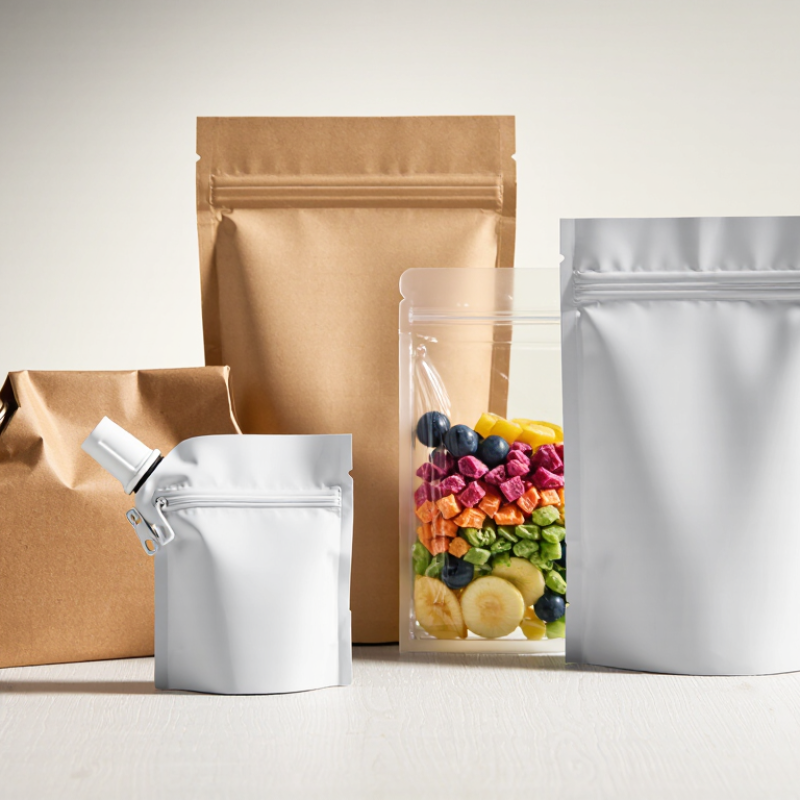
Packaging authority Walter Soroka describes packaging as “the science, art, and technology of enclosing and protecting products for distribution, storage, sale, and use.” This principle remains highly relevant to modern Zipper Pouch selection. Stand-up pouches suit shelves and lightweight products. Flat pouches save space during storage. Spouted designs support controlled pouring. Reclosable formats help preserve freshness after opening. Each type solves a different practical problem.
But no format is perfect.
Material structure matters. A kraft-paper appearance may support a natural brand image, yet it may need a stronger inner barrier. Transparent film improves product visibility, but light-sensitive contents may require protection. Buyers should request seal tests, zipper cycle tests, migration documentation, and production samples before placing large orders. These checks reveal details that a catalog usually hides.
This guide compares the best Zipper Pouch types for global buyers in 2026. It considers product protection, filling methods, transport efficiency, customization, sustainability claims, and supplier reliability. Some recommendations may still require adjustment. Real products behave differently across climates, machines, and supply chains. That is where careful testing becomes more valuable than attractive promises.
2026 Best Zipper Pouch Types for Global Buyers?
Zipper pouches differ mainly by structure, protection, and user experience. PE pouches are flexible, economical, and suitable for lightweight products. Their soft film feels practical, but sharp contents may puncture it. PP pouches offer higher stiffness and a clearer appearance. They work well when product visibility and shape retention matter. PET/PE pouches combine a strong outer layer with a sealable inner layer. This structure supports better printing, handling, and moderate moisture protection. It is a dependable choice for many everyday packaged goods.
Kraft pouches create a natural, paper-like appearance. Most use a plastic inner layer for sealing and basic moisture resistance. Their appearance feels warm, but kraft alone is not a complete barrier. Foil-laminate pouches provide stronger protection against light, oxygen, and moisture. They suit sensitive products requiring extended stability. However, they can cost more and may complicate recycling decisions. No material is perfect. Buyers should check thickness, zipper strength, seal quality, and actual barrier test data before ordering. A sample may look excellent, yet fail after repeated opening.
Tips: Request samples from several production batches. Fill them with the real product, then test storage, stacking, and zipper use. Ask for material composition, migration data where relevant, and factory quality records. Also confirm dimensions after filling. Small changes can affect shelf presentation and shipping efficiency. My practical preference is to compare performance first, then appearance and price. That order is not always followed, and it often creates avoidable problems.
For global pouch buyers, WVTR and OTR deserve more attention than glossy film claims.
WVTR measures moisture vapor transmission, while OTR measures oxygen transmission. OTR is normally reported in cc/m²/day. WVTR is usually reported in g/m²/day, not cc.
For dried foods, powders, and moisture-sensitive ingredients, a practical high-barrier target is below 1.0 for both values. Testing should follow ASTM F1249 for WVTR and ASTM D3985 for OTR.
Test conditions matter. A pouch tested at 23°C may perform differently at 38°C and high humidity.
FAO’s 2024 food-loss reporting estimates that 13.2% of food is lost before retail. Better barrier control can help protect quality during storage and transport. A metallized or foil-based zipper pouch may reach very low transmission rates, but its seal area remains vulnerable. One tiny wrinkle beside the zipper can create a serious leakage path.
I have seen buyers compare film numbers while overlooking seal testing. That is a costly gap. Smithers’ flexible-packaging outlook also emphasizes longer shelf life and material efficiency as major industry priorities.
Still, the lowest number is not automatically the best choice. Recyclability, puncture resistance, filling temperature, and zipper alignment also affect performance.
A useful purchasing specification should state target values, test methods, humidity, temperature, and acceptable variation. Suppliers should provide recent laboratory results, not only marketing sheets.
For global buyers, zipper pouch selection should begin with food-contact evidence, not appearance. Mono-material PE or PP pouches simplify recycling discussions and may suit dry foods. PET/PE laminates provide stronger printing and sealing performance. Aluminum barrier laminates protect sensitive products from light, oxygen, and moisture. The structure must match the food, filling temperature, storage period, and distribution climate.
For the United States, request documentation showing compliance with relevant FDA food-contact requirements. The supplier should identify each polymer, adhesive, ink, and additive. Testing should reflect the intended food type and contact conditions. In the European Union, Regulation (EC) No 1935/2004 requires materials to avoid unsafe migration and unacceptable food changes. Ask for a Declaration of Compliance, migration test reports, traceability records, and suitable production controls. Supporting evidence may also involve plastic-specific rules and good manufacturing practice requirements.
ISO 22000 is different. It verifies a food safety management system, not automatic pouch approval. A certified converter should control hazards, suppliers, hygiene, complaints, and corrective actions. Check the certificate scope and expiration date. Do not accept a generic “food grade” statement. It is too vague.
Some checks fail. I have seen documents omit zipper components or adhesive layers. Buyers should compare the technical file with the actual pouch construction. Independent laboratory testing can expose migration risks, seal weakness, or odor transfer. Requirements also change, so legal review remains necessary before large orders.
| Zipper Pouch Type | Typical Material Structure | Best-Fit Food Applications | Barrier and Functional Profile | U.S. FDA Compliance Route | EU Food-Contact Compliance Route | ISO 22000 Procurement Evidence | Critical Buyer Verification Points |
|---|---|---|---|---|---|---|---|
| Mono-PE Recyclable Pouch | Low-density polyethylene or linear low-density polyethylene film, often with a polyethylene zipper and sealant layer. | Dry snacks, bakery products, frozen foods, produce, powders, and products requiring a flexible, lightweight pack. | Good moisture resistance and heat-seal performance; generally lower oxygen and aroma barrier than foil or high-barrier laminates unless a barrier layer is added. | The specific resin, additives, colorants, inks, coatings, and adhesives must be authorized for the intended food-contact use under applicable FDA regulations, such as relevant provisions in 21 CFR Parts 175–178, or supported by an applicable Food Contact Notification or other valid authorization. | Must comply with Regulation (EC) No 1935/2004 and Good Manufacturing Practice Regulation (EC) No 2023/2006. If the structure contains plastic layers, applicable requirements of Regulation (EU) No 10/2011 should be assessed, including overall and specific migration limits. | Request evidence that the converting site operates an effective food-safety management system, including hazard analysis, prerequisite programs, traceability, allergen control where relevant, and controlled supplier approval. ISO 22000 is a management-system standard, not a material authorization. | Confirm polyethylene grade, recycled-content status, migration testing, seal integrity, zipper cleanliness, intended food types, temperature limits, and whether the final pouch—not only the raw film—has been evaluated. |
| Mono-PP Recyclable Pouch | Cast or oriented polypropylene film with a polypropylene-compatible zipper and heat-seal layer. | Snacks, confectionery, dry ingredients, frozen products, and applications needing stronger heat resistance than many polyethylene structures. | Good moisture resistance, stiffness, clarity options, and heat-seal capability; oxygen and light protection depend on coatings or additional barrier layers. | Verify that every polymer, additive, ink, coating, adhesive, and zipper component is suitable for the intended conditions of use under applicable FDA requirements. A supplier declaration should identify the regulatory basis and testing conditions. | Assess compliance with EC 1935/2004, EC 2023/2006, and, where applicable, EU 10/2011 for plastic components. A written Declaration of Compliance is normally expected for plastic food-contact materials. | Verify documented controls for formulation changes, line clearance, foreign-body prevention, sanitation, lot identification, and recall or withdrawal procedures within the supplier’s food-safety system. | Check polypropylene type, sealing temperature, brittleness at low temperature, migration results, ink and adhesive placement, zipper-to-film compatibility, and recyclability claims under the destination market’s rules. |
| PET/PE Laminated Stand-Up Pouch | Polyester outer layer laminated to polyethylene sealant film, commonly with a polyethylene zipper. | Coffee alternatives, snacks, pet food, dry foods, powders, and products requiring improved print protection and package strength. | Good mechanical strength, printability, moisture resistance, and shelf presentation; oxygen barrier is moderate unless a dedicated barrier layer or coating is added. | Confirm that the polyethylene food-contact layer and all adhesives, inks, coatings, and processing aids are suitable for the intended use. The non-food-contact polyester layer still requires assessment for potential transfer through the structure. | Comply with EC 1935/2004 and EC 2023/2006. EU 10/2011 generally applies to plastic layers and should be considered together with non-intentionally added substance, dual-use additive, and migration requirements. | Request a controlled-lamination process, adhesive curing records, traceability from film to finished pouch, documented nonconformance handling, and evidence of hygiene controls appropriate for food packaging production. | Verify adhesive cure time, residual solvents where relevant, delamination strength, overall migration, specific migration, odor transfer, zipper sealing, and storage conditions before and after full cure. |
| PET/PE High-Barrier Pouch | Polyester outer layer, metallized polyester or coated barrier film, adhesive layer, and polyethylene sealant film with a zipper. | Coffee, nuts, dried fruit, powdered beverages, spices, and oxygen- or light-sensitive dry foods. | Stronger protection against oxygen, moisture, aroma loss, and light than standard PET/PE structures; barrier performance depends on film grade, coating quality, seals, and pouch design. | Obtain documentation for the food-contact layer and evaluate the complete multilayer construction. FDA status must cover applicable components and intended conditions, including storage temperature and food type. | Evaluate the food-contact layer under EU 10/2011 where applicable, while the complete article must meet EC 1935/2004 and be manufactured under EC 2023/2006 GMP controls. Migration testing should reflect the final construction. | Verify barrier-film supplier approval, change-control procedures, critical control or operational prerequisite controls, seal and leak testing, environmental monitoring where applicable, and finished-lot traceability. | Request oxygen transmission rate, water-vapor transmission rate, light-barrier data, migration testing, laminate bond strength, seal-strength data, and confirmation that the zipper does not create a barrier or leakage weakness. |
| PET/Aluminum Foil/PE Retort- or Heat-Processed Pouch | Polyester outer layer, aluminum foil barrier layer, adhesive, and heat-sealable polyethylene or polypropylene inner layer; zipper suitability depends on the process. | High-barrier dry foods, emergency foods, powdered products, and selected heat-processed applications when the complete pouch is specifically validated. | Excellent light, oxygen, moisture, and aroma barrier; aluminum foil can improve shelf life but requires careful control of pinholes, folds, seals, and processing conditions. | Verify FDA suitability for the food-contact sealant, adhesive, coatings, inks, and any closure component under the actual time and temperature conditions. Do not assume a standard dry-food pouch is suitable for retort or hot-fill use. | Verify EC 1935/2004 and EC 2023/2006 compliance, plus applicable plastic-layer requirements under EU 10/2011. The final pouch should be assessed under the intended processing and storage conditions. | Request process validation, heat-seal and leak-testing records, traceability, corrective-action records, hygienic design controls, and documented approval of critical raw-material suppliers. | Confirm whether the zipper remains functional after processing, retort or hot-fill temperature and time, foil pinhole limits, laminate bond strength, seal integrity, migration, delamination resistance, and transport simulation results. |
| Paper-Based Laminated Zipper Pouch | Paper outer layer combined with a plastic coating, film, or sealant layer; zipper is commonly polymer-based. | Dry snacks, tea, bakery goods, cereals, powders, and products where a paper appearance is commercially important. | Improved stiffness and paper appearance; moisture, grease, oxygen, and seal performance depend on the internal plastic layer or coating. | Paper, coatings, adhesives, inks, and plastic components must be evaluated for the intended food-contact use. Paper suitability alone does not establish compliance for the complete laminated pouch. | Comply with EC 1935/2004 and EC 2023/2006. Plastic coatings or films may fall within EU 10/2011; inks, adhesives, and paper components also require appropriate safety assessment under applicable national or industry provisions. | Verify fiber and chemical supplier controls, contamination prevention, print-area controls, lamination records, traceability, and a documented system for managing recycled fiber or recovered-material risks where used. | Check grease resistance, mineral-oil and set-off risk where relevant, coating coverage, migration from inks and adhesives, zipper attachment, moisture transmission, and whether the paper is direct-contact or separated by a functional barrier. |
| Compostable or Bio-Based Zipper Pouch | May use bio-based polymers, cellulose-based films, compostable coatings, or blends; zipper material and adhesive chemistry must be assessed separately. | Dry foods with moderate shelf-life requirements, specialty products, and applications supported by suitable end-of-life infrastructure. | Barrier, seal strength, humidity resistance, and storage stability vary widely; compostability or bio-based content does not automatically mean food-contact compliance. | Confirm FDA authorization for the actual food-contact substances and intended conditions. Bio-based origin is not a substitute for compliance with applicable FDA food-contact requirements. | Evaluate EC 1935/2004, EC 2023/2006, and EU 10/2011 where plastic materials are involved. Compostability claims should be supported by the applicable certification and market-specific disposal requirements, separately from food-contact safety. | Request evidence of controlled raw-material specifications, contamination controls, change management, traceability, and supplier qualification. ISO 22000 certification, where provided, should be checked for scope and current validity. | Verify food-contact migration, humidity and shelf-life performance, compostability standard and industrial or home-composting conditions, labeling substantiation, zipper breakdown behavior, and local waste-management compatibility. |
| Buyer compliance note: FDA, EU 1935/2004, and ISO 22000 address different responsibilities. FDA and EU rules concern the safety and suitability of food-contact materials and articles; ISO 22000 concerns a food-safety management system and does not itself certify that a pouch material is legally authorized for food contact. Final approval should be based on the complete pouch construction, intended food, contact conditions, processing, storage, and destination-market requirements. | |||||||
For global buyers in 2026, zipper pouch selection should begin with material evidence, not appearance. Mono-material PE pouches use polyethylene for the film, zipper, and often the spout. This simpler structure can improve mechanical recycling where suitable collection and reprocessing systems exist. However, “mono-material” does not automatically mean recyclable everywhere. Local facilities, inks, adhesives, thickness, and product contamination still matter.
ISO 18606 addresses packaging designed for organic recycling, including composting and biodegradation requirements. ASTM D6400 is another technical standard for plastics intended for industrial composting. These standards do not mean a pouch will disappear in a garden or household compost bin. Buyers should request current test reports, certification scope, and disposal instructions. Check whether the evidence covers the finished pouch, not only the raw film. Small details matter.
In factory trials, zipper alignment and seal strength often reveal more than a material declaration. A pouch may pass laboratory testing but fail after filling, transport, or exposure to oil. Ask suppliers for migration data, tensile results, and simulated shipping tests. Request samples in the exact size and structure planned for production. That costs time. It can prevent expensive surprises.
Sustainability claims need careful wording. A recyclable pouch may have limited value without collection access. A compostable pouch may contaminate recycling streams if sorted incorrectly. I would also review barrier coatings, because they can challenge recycling performance. The practical choice is rarely perfect. It is a documented balance between product protection, local infrastructure, and honest end-of-life guidance.
Global buyers often compare zipper pouches by appearance first.
That is a costly habit.
In practical sourcing reviews, pouch structure should match product weight, moisture sensitivity, and handling frequency.
60–80 μm
A 60–80 μm pouch suits lightweight samples, dry goods, and short distribution cycles. It saves material, but the seal can feel less forgiving.
90–120 μm
At 90–120 μm, buyers gain better stiffness and puncture resistance for repeated opening.
130–150 μm
The 130–150 μm range supports heavier contents and rougher warehouse movement.
More thickness is not automatically better.
Empty weight and freight rise too.
A useful scorecard records thickness, pouch type, MOQ, unit cost, seal quality, and intended end use.
Stand-up zipper pouches
Stand-up zipper pouches display well and hold shape on shelves.
Flat zipper pouches
Flat zipper pouches usually reduce storage volume and work for refills or documents.
Spouted formats
Spouted formats can improve controlled pouring, but their fittings may raise MOQ and inspection needs.
MOQ changes by film structure, printing method, dimensions, and order season.
Request a sample run, not only a quotation.
One spreadsheet can still mislead.
Cost should be measured per usable pouch, including rejected pieces, freight, and secondary packing.
Ask for thickness tolerance and test results for zipper strength, seal integrity, and drop handling.
I would also compare three filled samples after opening them repeatedly. Small defects appear then.
A lower-cost option may fail during packing, while an expensive one may add unnecessary material.
Recheck the choice against actual volume, storage temperature, and buyer handling.
That step is easy to skip.